Agentic Dev Harness
My unified AI engineering environment — skills, hooks, custom agents, cross-model delegation, and project memory that follows repos across machines.
PowerShell + Python · Claude Code · OpenCode — private
Working across twenty-plus repos with AI agents only pays off if the environment routes itself — the right skill, agent, and model for the task without being told. This harness is that environment: a versioned dotfiles system for Claude Code and OpenCode with a curated skill library, lifecycle hooks, a lean roster of custom agents (a precision/hardware-safety science reviewer, a docs researcher, a code-navigation agent), and a capability map that acts as the router.
Some pieces that earn their keep:
- Cross-model delegation — a helper that fans read-only research and bug-hunts out to external CLI agents (Gemini, GPT) for throughput and genuine second opinions, plus a rescue path that hands stalled tasks to a different model entirely.
- Project memory by identity — durable per-project memory keyed to the repo’s identity rather than its path, so context survives re-clones, renames, and machine moves; hydration and central snapshots are automatic.
- Safety rails as process — plan-mode interviews that stress-test designs before code, verification-before-completion gates, and scheduled config snapshots with secret-scanning before anything is committed.
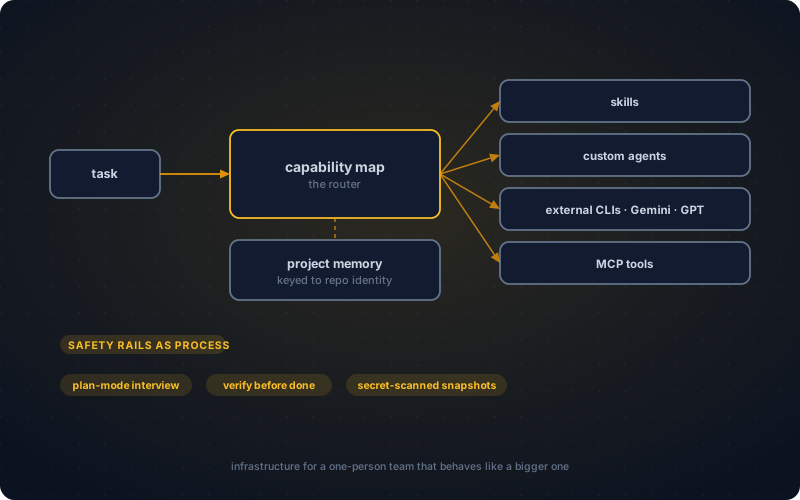
The capability map routes each task to the right skill, agent, or model — and memory follows the repo, not the folder.
It’s infrastructure for a one-person team that behaves like a bigger one — the same thesis as my day job, pointed at my own tooling.